

Introduction
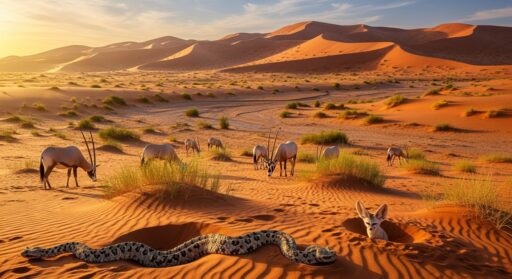
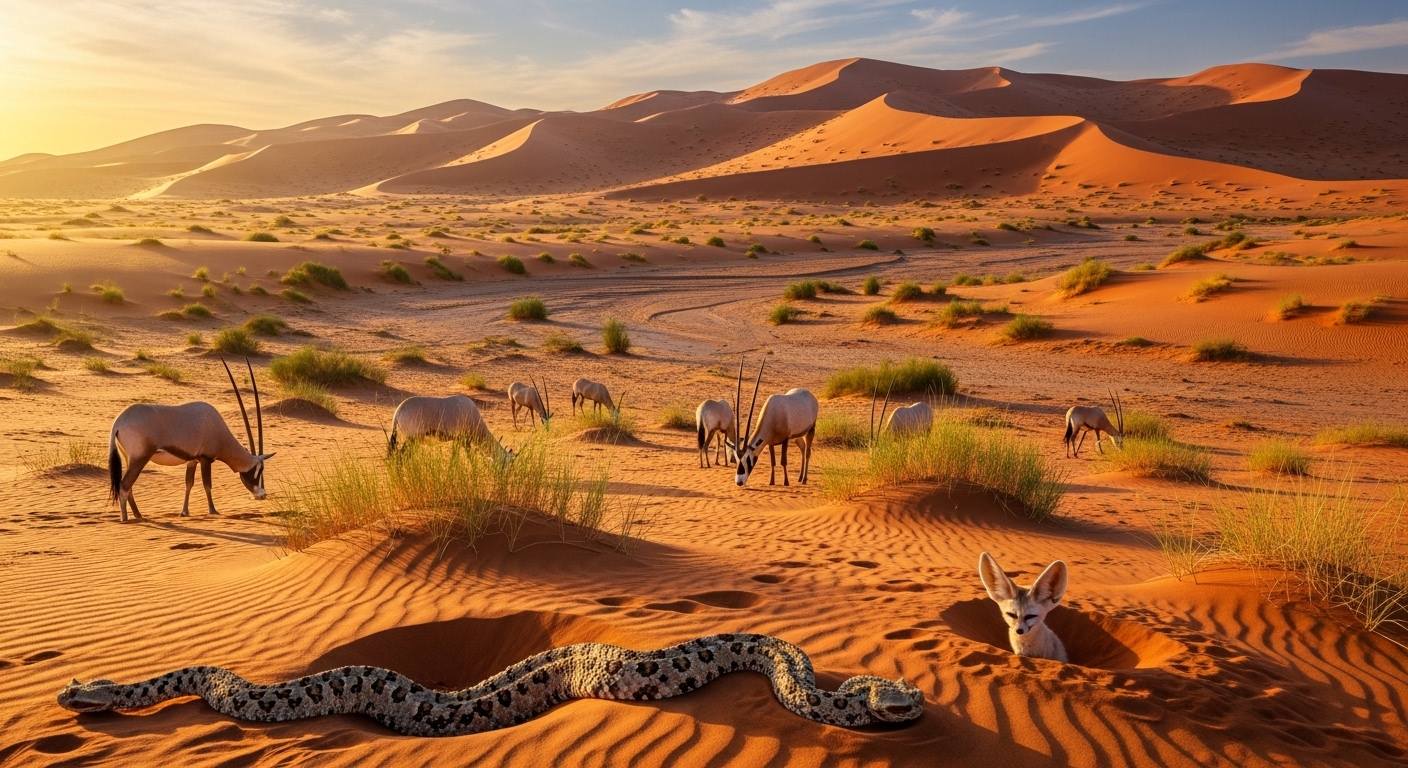
The Rub’ al Khali, or the Empty Quarter, is a name that evokes a sense of absolute desolation—an endless sea of sand dunes stretching across the southern Arabian Peninsula. As the world’s largest continuous sand desert, its harsh conditions, with extreme temperatures and minimal rainfall, suggest a landscape devoid of life. Yet, this is a profound misconception. The Empty Quarter is not empty at all; it is a realm of astonishing biodiversity, home to a unique community of plants and animals that have mastered the art of desert survival through remarkable adaptations. Exploring this “barren” wilderness reveals a fragile but resilient ecosystem of stunning complexity.
History
The Rub’ al Khali has been a formidable barrier and a challenging home for millennia. While its core has always been largely uninhabited, Bedouin tribes have navigated and survived on its fringes for centuries, possessing the deep knowledge required to find water and pasture. For the wider world, it remained one of the last unexplored regions on Earth, with its vast interior only being mapped by expeditions like those of Wilfred Thesiger in the 1940s. Historically, its value was seen in the trade routes that skirted its edges. Today, its significance is understood differently: as a unique ecological zone and a vast reservoir of oil and gas, making its conservation a complex but critical challenge.
Key Features
The biodiversity of the Empty Quarter is specialized and cryptic:
- Flora of Resilience: Plant life is sparse but tenacious. Species like the Arta (Calligonum comosum) bush send roots dozens of meters deep to reach water. The perennial Ghaft tree (Prosopis cineraria) is a lifeline for wildlife, providing shade and nutrition. After rare rains, the desert erupts in a fleeting bloom of ephemeral annual plants, completing their entire life cycle in a matter of weeks.
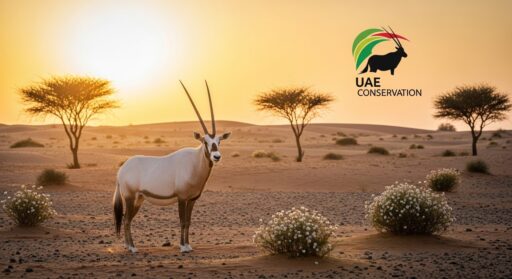
- Adapted Fauna: The animal inhabitants are masters of stealth and endurance. The Arabian Oryx and Sand Gazelle can go without water for long periods. The Rüppell’s fox and the Sand Cat, with their fur-covered paws, are expert nocturnal hunters. The desert is also home to a variety of reptiles, including the spiny-tailed lizard (dhub), and invertebrates like scorpions and beetles, all exquisitely adapted to conserve water and withstand heat.
- Avian Life: Several bird species, such as the Houbara bustard and various larks and wheatears, are resident in the desert, surviving on seeds and insects. The desert also serves as a corridor for migratory birds.
Cultural Significance
For the Bedouin, the Empty Quarter was not an empty wasteland but a landscape filled with meaning and resources. They possessed an intimate knowledge of its hidden water sources (aïn), its seasonal plants, and the behavior of its animals. This knowledge was a matter of life and death and was passed down through generations. The desert instilled the core Bedouin values of patience, resilience, and respect for the power of nature. In modern Emirati culture, the “Empty Quarter” retains a powerful mystique, representing the ultimate challenge and the pure, untamed heart of the Arabian desert.
Modern Relevance
The modern relevance of the Empty Quarter’s biodiversity is twofold. First, it is a barometer for the health of the desert ecosystem. As climate change and human activity exert new pressures, monitoring species like the Houbara bustard and the Arabian Oryx provides crucial data on environmental change. Second, the UAE has established protected areas on the fringes of the Empty Quarter, such as the Liwa area, to conserve this unique habitat. Sustainable tourism, including guided desert safaris, is being developed to showcase this incredible ecosystem while minimizing human impact. Understanding and protecting the life of the Rub’ al Khali is essential, as these species hold genetic secrets of survival that may become increasingly valuable in a warming world.
Conclusion
The “Empty” Quarter is a misnomer that hides a world of life. It is a testament to the tenacity of nature, proving that even the most extreme environments can support a complex web of life when given the chance. The rolling dunes are not a monument to emptiness, but a sanctuary for specialists, a place where life has evolved some of its most ingenious survival strategies. Protecting this vast, fragile wilderness is not just about saving a few desert species; it is about honoring a unique part of the planet’s natural heritage and preserving the profound, austere beauty of a landscape that has shaped the identity of the Arabian Peninsula for ages.