

Introduction
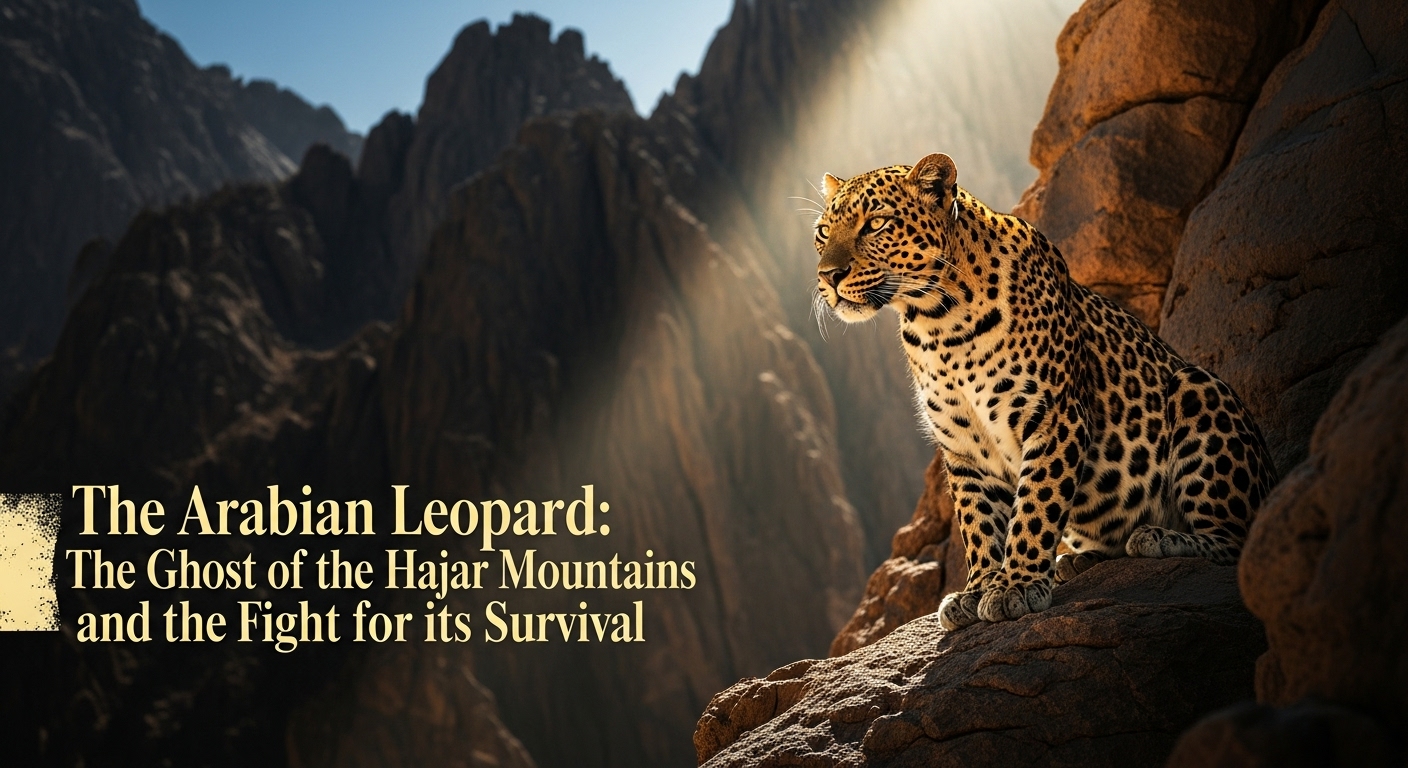
In the rugged, dramatic peaks of the Hajar Mountains, a ghost silently stalks the wadis—the Arabian Leopard. The largest and most powerful cat native to the Arabian Peninsula, it is a creature of breathtaking beauty and profound elusiveness. Today, it is also the embodiment of a conservation crisis, classified as Critically Endangered, with perhaps only a handful of individuals remaining in the wild in the UAE. The story of the Arabian Leopard is a race against time, a desperate struggle to pull a magnificent predator back from the very brink of extinction and restore the ecological balance of the mountain ecosystem it once ruled.
History
The Arabian Leopard (Panthera pardus nimr) was once the apex predator of the Hajar range, its domain stretching from the mountains of the UAE into Oman and beyond. For centuries, it lived in relative equilibrium with its environment, preying on ibex, gazelle, and other mountain ungulates. However, the 20th century brought a cascade of threats. Habitat loss and fragmentation from development, a sharp decline in its natural prey due to overhunting, and direct persecution by humans who saw it as a threat to livestock decimated its population. By the late 1900s, the leopard had vanished from most of its former range, becoming a rare and whispered-about legend.
Key Features
The Arabian Leopard is a distinct subspecies, perfectly adapted to its arid, mountainous home:
- Size and Appearance: It is the smallest of the leopard subspecies, an adaptation to its resource-scarce environment. Its coat is pale yellow or golden with distinctive rosettes, providing perfect camouflage among the sun-drenched rocks and shadows of the wadis.
- Elusive and Nocturnal: An incredibly secretive animal, it is primarily nocturnal and crepuscular (active at dawn and dusk), making sightings exceptionally rare. Its solitary and territorial nature means it requires a very large home range to survive.
- Apex Predator Role: As the top predator, the leopard plays a crucial role in maintaining the health of the ecosystem. By preying on the sick and weak, it controls herbivore populations, which in turn prevents overgrazing and allows vegetation to recover.
Cultural Significance
In the folklore of the mountain tribes, the “Nimr Al Arab” (Arabian Leopard) was a symbol of strength, stealth, and the wild, untamed spirit of the mountains. Its presence commanded respect and a degree of fear. Its disappearance represents a broken link in the ecological and cultural chain of the region. The fight to save it has taken on a deep symbolic meaning; it is no longer just about saving a single species, but about restoring the wholeness and wild integrity of the Hajar Mountain ecosystem itself. It has become a flagship species for conservation in the UAE, mobilizing public sentiment and political will.
Modern Relevance
The conservation effort for the Arabian Leopard is one of the most ambitious and critical in the UAE. The leading initiative is the Arabian Leopard Conservation Programme, spearheaded by Sharjah’s ruler, Sheikh Sultan bin Muhammad Al Qasimi. A key component is a state-of-the-art breeding center in Sharjah, which aims to create a genetically healthy captive population with the ultimate goal of reintroducing leopards into protected and restored habitats in the Hajar Mountains. This involves not just breeding, but also extensive habitat restoration, reintroducing prey species like the Arabian Tahr and Nubian Ibex, and working with local communities to mitigate human-wildlife conflict. It is a holistic, long-term strategy to rewrite the fate of this iconic animal.
Conclusion
The Arabian Leopard is the ghost that the UAE is determined to make real again. Its faint footprints in the dust of the wadis are a haunting reminder of what has been lost, but also a powerful motivation for action. The battle for its survival is a test of the nation’s commitment to its natural heritage, a complex project that combines advanced science, community engagement, and sheer determination. While the path to recovery is long and uncertain, every step taken—every successful birth in the breeding center, every protected hectare of habitat—is a step towards a future where the majestic roar of the leopard might once again echo through the mountains, a testament to a nation that refused to let its ghost vanish forever.