

Introduction
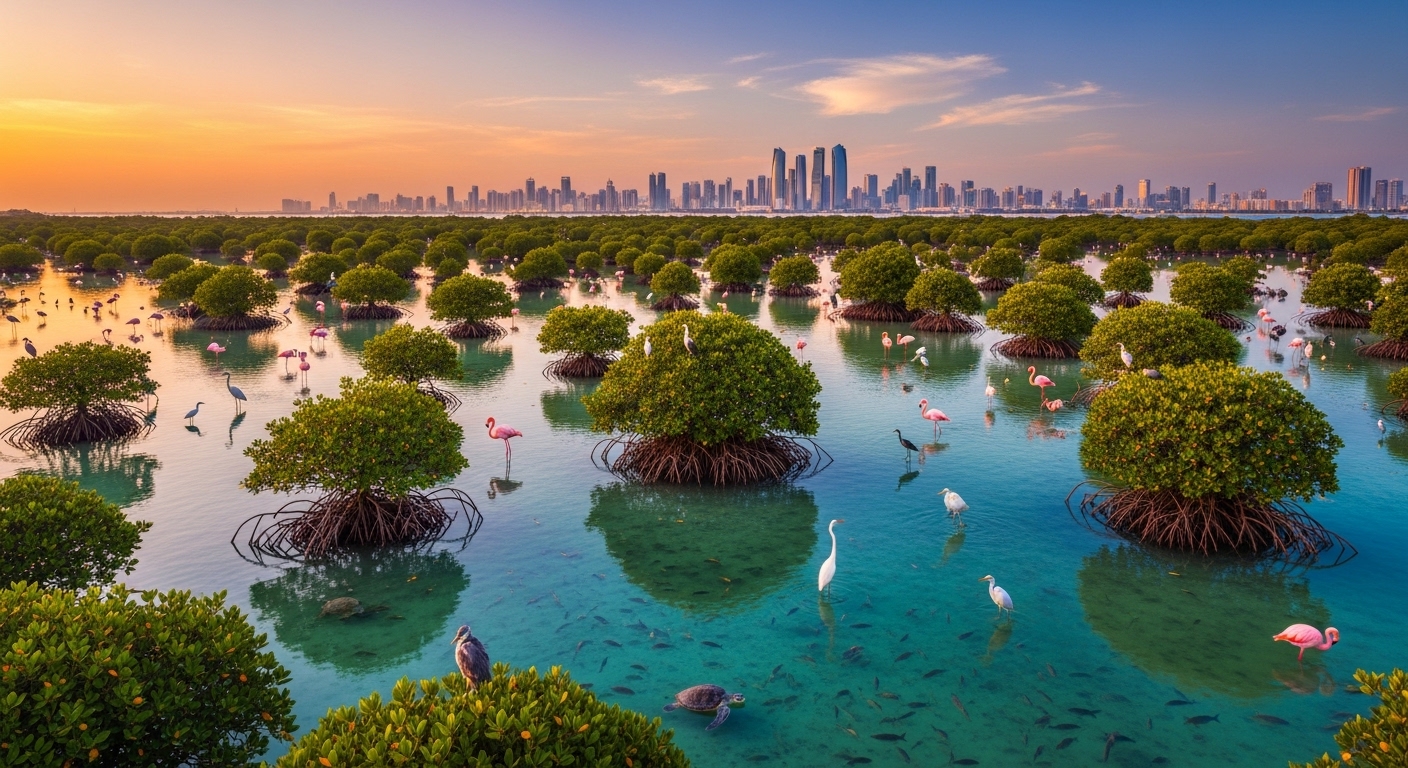
Amidst the hyper-modern skyline of Abu Dhabi lies a ancient, tangled, and vitally important world: the mangrove forest. These coastal wetlands, where salt-tolerant trees and shrubs thrive in the intertidal zone, are far more than just a green space. They are a biological powerhouse, a natural coastal defender, and a critical nursery for marine life. In a nation defined by its arid environment, the mangroves represent a unique and precious ecosystem, a lush oasis where the sea meets the sand. Their preservation amidst rapid urban development highlights the UAE’s growing commitment to balancing economic progress with ecological responsibility.
History
The mangrove forests along the coast of Abu Dhabi, primarily consisting of the grey mangrove (Avicennia marina), have existed for thousands of years. They have long been a part of the local ecosystem, providing resources for coastal communities. However, their modern history is one of threat and subsequent protection. As Abu Dhabi grew from a small pearling village into a global capital, coastal land reclamation for real estate and infrastructure posed a significant risk to these fragile habitats. Recognizing their immense value, the late Sheikh Zayed bin Sultan Al Nahyan initiated early conservation efforts. Today, this work has been amplified, with the government designating large areas, such as the Mangrove National Park, as protected zones.
Key Features
The mangrove ecosystem is a marvel of ecological engineering:
- Coastal Protection: The dense, complex root systems of the mangroves act as a natural buffer, absorbing the energy of storm surges and waves, thereby reducing coastal erosion and protecting inland areas from flooding.
- Carbon Sequestration: Mangroves are among the most effective carbon sinks on the planet, storing significantly more carbon per hectare than most terrestrial forests, making them a crucial asset in the fight against climate change.
- Marine Nursery: The calm, nutrient-rich waters among the roots provide a safe breeding and nursery ground for a vast array of fish, crustaceans (like shrimp and crabs), and other marine species, many of which are commercially important.
- Biodiversity Hotspot: The forests are a haven for birdlife, including flamingos, herons, and egrets, which nest and feed in the area. They also provide a habitat for other species like foxes and gazelles that have adapted to the coastal environment.
Cultural Significance
While not as central to daily life as the desert or the open sea, the mangroves have always been a part of the regional landscape. In the past, their wood was sometimes used for building and fuel, and the rich marine life they supported contributed to local fisheries. Today, their cultural significance has evolved. They have become a symbol of environmental awareness for the urban population of the UAE. For city dwellers, kayaking through the serene, shaded channels of the mangrove forests offers a direct and tangible connection to nature, fostering a sense of stewardship and appreciation for the nation’s less obvious natural wonders.
Modern Relevance
The mangroves of Abu Dhabi are at the forefront of the UAE’s green strategy. The Mangrove National Park is a hub for eco-tourism and environmental education. Furthermore, the UAE has embarked on ambitious mangrove afforestation projects, such as the Abu Dhabi Mangrove Initiative, which aims to plant millions of new mangroves using advanced techniques like drone seeding. These projects are not just about conservation; they are a key part of the UAE’s Net Zero by 2050 Strategic Initiative, as the mangroves’ carbon-capturing abilities contribute directly to the nation’s climate goals. They are a living laboratory for nature-based solutions to global environmental challenges.
Conclusion
The mangroves of Abu Dhabi are a powerful paradox: a lush, watery forest thriving on the edge of a desert metropolis. They are a testament to the fact that true development is not about conquering nature, but about learning to coexist with it. Their preservation and expansion demonstrate a mature understanding that these ecosystems are not obstacles to progress, but essential partners in building a sustainable and resilient future. As the UAE continues to grow, the mangroves stand as a serene, green anchor, reminding the nation that its greatest strength may lie in protecting the fragile, vital ecosystems that have quietly sustained its coasts for millennia.